Pages

Showing posts with label food activism. Show all posts

Sunday, June 28, 2015

Becoming a Meal Prep Master


Do you know those people who show up to the lunchroom at work and always have something that looks and smells delicious? Something that, when they microwave it, fills the kitchen with enticing aromas?

Have you ever wondered how you can become one of those people? How they find the time?

The answer: meal planning and prep.

I used to bring a Lean Cuisine meal to work EVERY DAY. When I got home, I would eat something like scrambled eggs, grilled cheese, or a quesadilla. I didn't really like vegetables or know how to prepare them.  

When I read Michael Pollan's In Defense of Food, however, I radically changed almost everything about my diet. I stopped eating most highly-processed foods (anything with ingredients I couldn't pronounce or weren't food) and upped my calories from plant foods. 

The truth is, however, this type of eating takes a lot more planning than the old way. Whether you're interested in meal prepping to save time, money, the environment, or your health, here are a few of the ways that I've found to make meal planning and prepping easier.


Get to know yourself as a cook.
If you've never done much cooking, that doesn't mean you can't change the way you eat to include more home-cooked foods. It just means you might need to experiment for awhile. Some people don't really like cooking, and so they'd rather sacrifice one whole day a week (or a month, if they are really organized!) to cooking. I love cooking and so I don't mind doing some cooking mid-week. I also like to buy a lot of fresh produce or use things from the garden, so that means that I go shopping every week (usually twice - one "big shopping" on Sunday, and one mid-week). Think about how much time you want to spend shopping and cooking. If you have a partner or roommate who likes chores that you don't, you might be able to trade some of them for food. I once had a roommate who did all the cleaning if I did all the shopping and cooking for both of us - perfect arrangement.

I use this meal planning pad from
Knock Knock for my planning
(then I use the back of last week's
 sheet for a shopping list).
Start with a plan.
Every Sunday, I sit down with my week's calendar and grab a few cookbooks, plus my Kindle so I can Pinterest. I plan breakfast, lunch, and dinner for every day, plus two snacks.

I'm one of those people who doesn't mind repeating foods I like, so I'll usually have the same thing for breakfast for a whole week (lately I've been digging a variation on these goat cheese, turkey and egg cups), and I have a routine for snacks: green smoothie in the morning, a piece of fruit and some almonds or a homemade granola bar for afternoon snack. I make the green smoothies each morning, because I don't like them more than a day old. However, I prep all of the fruits and veggies on Sundays, cutting them up and freezing them.

For lunch, I have three go-tos:
1. Mason jar salads (or other types of salad, like this bulgur blueberry mint salad I ate three days last week). Mason jar salads are great for prepping on the weekend and then popping in your lunch box, because they don't get soggy.  This article tells you the basics of how to prep them, and there are a bazillion variations on Pinterest. 
2. Homemade soups, stews, or chilis: These are more of a winter fave, when I want something warm. I usually cook these on Sunday, then portion out into individual containers for the week.
3. Dinner leftovers: I often cook one dinner on Sunday, eat it for dinner Sunday, Monday, and Tuesday, then have the leftovers for lunch on Wednesday and cook a new dinner Wednesday night.

If you're planning for kids, Kristin Howerton has awesome ideas for how you can set up a situation for them to make their own lunches. My friends who have smaller kids who can't yet make their own foods, put on their plans lines for their own lunches and snacks, and those for their kiddos. More detailed planning templates for whole families can be found a quick Google away.

On your plan, jot down any notes that are going to impact your time during the week. For example: last week I was planning to make chicken on Thursday night, but I had a work event in the early evening and knew I wouldn't have any energy when I got home. I put on my plan that I needed to make the marinade on Wednesday night, then put the chicken in the marinade before I went to work in the morning Thursday. When I got home, I just had to dump the chicken into the pan and bake it.

Shop smart:
Once you have a plan for all of your meals, go through your plan and write out your shopping list. Then here's the trick: only buy stuff on the list. I can't tell you the number of times I wanted to eat something bad for me, but couldn't because there was nothing in the house. If you need to, you might want to make some rules for yourself -- I tend to live by Pollan's food rules: Eat food, not too much, mostly plants.


For me, the hardest part is not shopping on the weekend, it's the desire for bad stuff during the week when I'm driving around for work. Diet Coke, get thee behind me!! This is the main reason I always have my snacks planned out, so I try not to be hungry.
Invest in the right tools:
If you're going to meal prep, you can't get around the fact that you need A LOT of containers. Some of my favorites:

Mason jars: They're not just for hipsters! Mason jars are excellent for salads, as I noted above, and for smoothies, soups, or anything somewhat liquidy. The lids go on super-tight, so they aren't easy to spill.
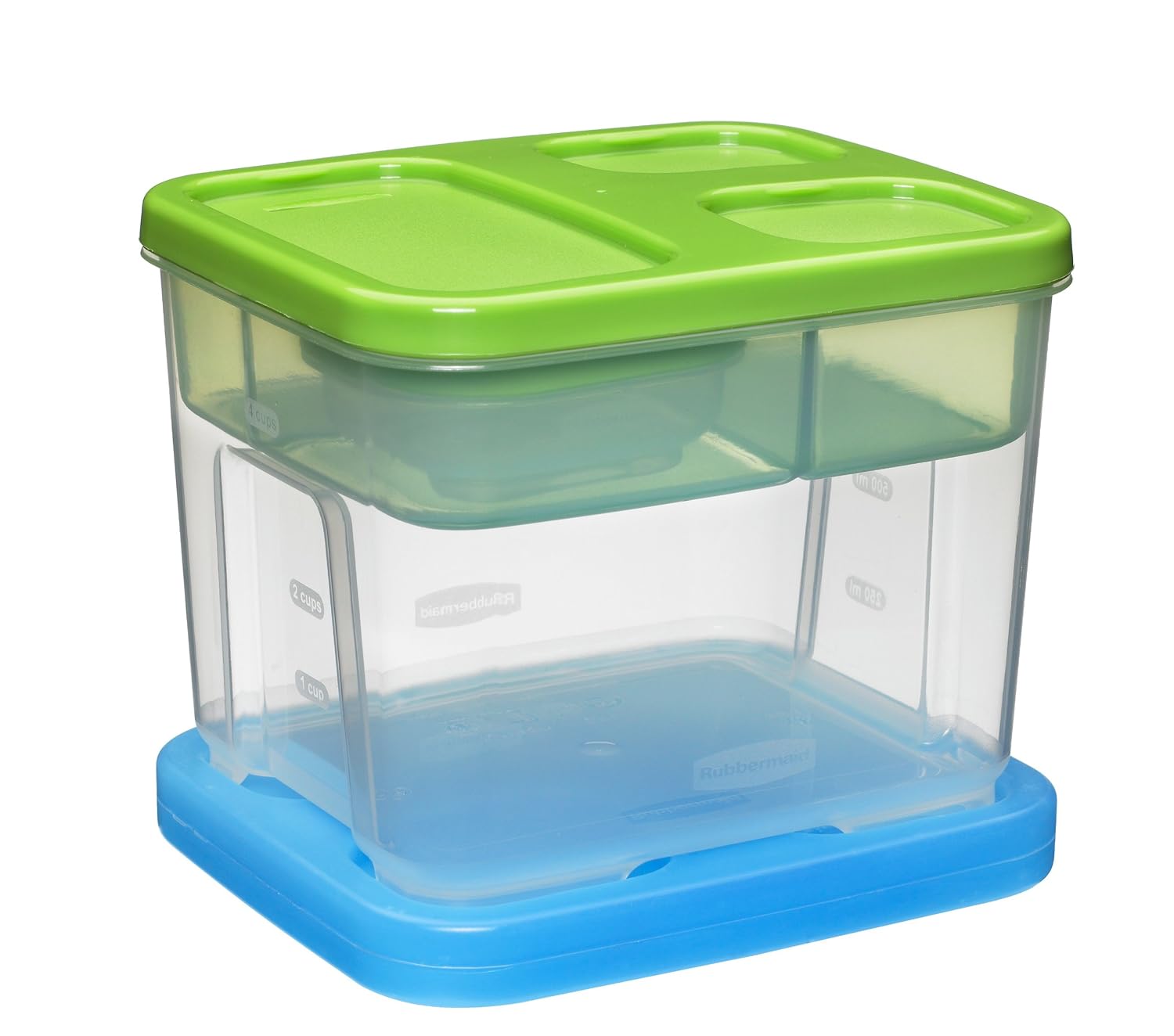
Lunch Blox:  I prefer glass containers for foods that I'm going to heat up, but for salads and snacks, Rubbermaid Lunch Blox are awesome. I have a couple of the salad Blox, and they are also great for what I call "snack bento": you can put a bunch of different small snack items, like some tomatoes, carrot sticks, a few Nut Thins, and some hummus all together, and they don't mix with each other because of the divisions in the Blox.
Small containers and spice jars: It's good to have lots of tiny containers -- I use these more than any others, because they help you keep a handle on portions. When you use up a spice, save the jar (wash it thoroughly or the spice flavor will linger), and it can be added as another small container.
Gallon zip bags: While I try not to use many items that aren't reusable, gallon zipper bags are the best for freezing fruit, soups, cooked grains, etc. This is because they can be stacked flat in the freezer, saving space. Depending upon what was inside them, they can be washed and reused before recycling.

Use the whole kitchen.
If you're one of those people who doesn't want to cook more than once a week, make use of the entire kitchen. When you plan, make sure you have one thing you can cook on the stovetop, one for the crockpot, one for the oven, and maybe one for the grill or toaster oven (I cook whole meals in the toaster oven, especially in the summer when I don't want to turn on the real oven). This is especially helpful when you're planning not just for one or two people, but a whole family, where you'll need multiple dinner entrees.

Meal planning and prep can be a shift in thinking about eating, which many of us tend to do on the fly, or turn to convenience foods. However, it also makes life more delicious -- I like to turn up the music when I'm cooking, and it's always wonderful to wake up in the morning knowing that I don't have to think about what to pack in my lunch kit.

Do you have any great tips for meal prepping?


Tuesday, May 12, 2015

Part of Your Wholesome Breakfast

Remember when this was the iconic "healthy" breakfast?
Photo: thefeedingdoctor.com
Breakfast. 

The most important meal of the day, they always say.


For me, it's also the most challenging meal of the day. I'm one of those folks up who wakes up feeling both hungry and like I don't want to eat. 


And of all the meals, breakfast seems to be the one that's been most colonized by the food-industrial complex (unless you count public school lunches -- but that's a whole other post).


Breakfast food aisle. Healthy?
Photo: lifeintheusa.com


Pop-tarts, cereal, cereal bars, yogurt in squeezable tubes, pre-made egg sandwiches... it's all incredibly processed. Whenever I walk down the center aisles of the grocery store. which I do only to buy select items on my list, I'm astounded by the variety of foodstuffs available to start your day that are basically just sugar and chemicals (and expensive!)


But I get that it is much more convenient to pop a waffle in the toaster than to actually make something -- and I'm definitely the type of person who likes to sleep in until the last possible second. 


I've developed a list of foods that I know will make a satisfying breakfast, that I will actually want to eat, and which are convenient and quick to prepare. Usually I go through phases where I'll eat one of these things every day until I get tired of it, then switch to something else on the list.


Avocado and Hummus Toast

I guess avocado toast is a thing now? I mean, I've seen it on the menu at actual restaurants, which is a little odd because it involves just smashing avocado onto toast. I usually use a slice of Ezekiel toast, mash a quarter of an avocado on it, add hummus, and then sprinkle with black pepper. Healthy fats, fiber, and protein - what more could you want?

Chia "Donuts"

Chia donuts with some mini-chocolate chips. Recipe to come!
These are my latest go-to breakfast. I discovered the recipe in my trusty Oh She Glows cookbook; they are vegan and gluten-free, made with homemade oat flour and chia seeds to fill you up. In the book, they are made with a lemon coconut cream glaze, but I skip this, and instead toast them and put a little peanut butter on them. I also substitute raw millet for half the chia seeds, because I like the crunch of the millet. I'll make a batch on Sundays, and then keep them refrigerated for the rest of the week.

I call them "donuts" in quotation marks, because, even though they are cooked in a doughnut pan, they aren't really something that a kid would crave. However, I've adapted the recipe to be more kid-friendly, and I'll be sharing the recipe for Cocoa Protein Power Donuts later this week!


Another benefit of making your own egg sandwich -
perfectly runny yolks.
Egg sandwiches
For years, egg sandwiches were a staple of my diet. I eat them less often now, as I've cut back on both dairy and eggs. However, they will always be a favorite. I prefer to make my own, rather than buying frozen, because I can choose eggs and meat that are free(er) of bad stuff. I like to use Applegate Farms turkey sausage.

How to cook your own egg patty? Crack an egg into a mug, then scramble it with a fork. Microwave for 38-40 seconds. Then flip the egg over in the mug, and microwave for another 30 seconds. Use a fork to get the egg out -- you'll have a round patty just the right size for an English muffin.


Overnight Oats

I've shared recipes for overnight oats before, but if you haven't tried them, I definitely recommend them. These are a great make-ahead, take-to-work breakfast, and the internet teems with recipes for chilled oatmeal, so no matter your flavor preference, you'll find something to suit it.

Good Food Made Simple Breakfast Burritos

Despite wanting to start the day with something I've cooked myself, there are days when I just can't make it happen. Particularly when I know I'm going to be gone for most of the day on the weekend, I like to pick up some of these breakfast burritos that I can nuke and eat quickly or take in the car. I've tried lots of different burritos in the natural foods frozen section, and many of them sacrifice taste to the health gods. I've found my favorite in the Good Food Made Simple brand. They are free from chemical preservatives, artificial flavors, sugar substitutes, etc. 


Breakfast in Spain - traditional Sevillana breakfast.
Now that's how we should do breakfast!


Sunday, November 2, 2014

Favorite Vegan Resources (for non-vegans too!)

Lately, I've been looking for some new cooking challenges. I feel like I've cooked a chicken every way possible, and because I don't eat mammals, this cuts back on my potential cooking explorations. There are only so many things you can put an egg on before you've exhausted the list.

I've also cut way back on dairy products. Aside from the splash of milk in my morning coffee, I'm eating dairy only once or twice a week.

Which brings me to vegan cooking.

Eww, you might be thinking. Isn't that a bunch of twigs and leaves in a bowl?

Luckily, vegan cooking has come a long way. Even better, there are now lots of resources for vegan recipes that are also made from whole foods. I don't know about you, but a lot of vegans I've known have eaten as much processed crap as carnivores. As whole foods become more popular and readily available, vegan recipes are popping up more often to use them (and it's easier to find recipes without soy products, which I try to avoid because a) gross; and b) there are questions about how healthy they are for women).

(And I don't have to tell you that diets high in plant foods are way better for the Earth. Activism on a plate).

Recently, about 2/3 of my diet has been vegan. This means new techniques to learn and new cooking questions to answer, such as: how do you make foods full of vegetables not turn out mushy? And: how many ways can you actually use a cashew to mimic a dairy product?

Along the way, I've found some favorite resources that anyone, even carnivores, can enjoy:

Oh She Glows (cookbook and blog)

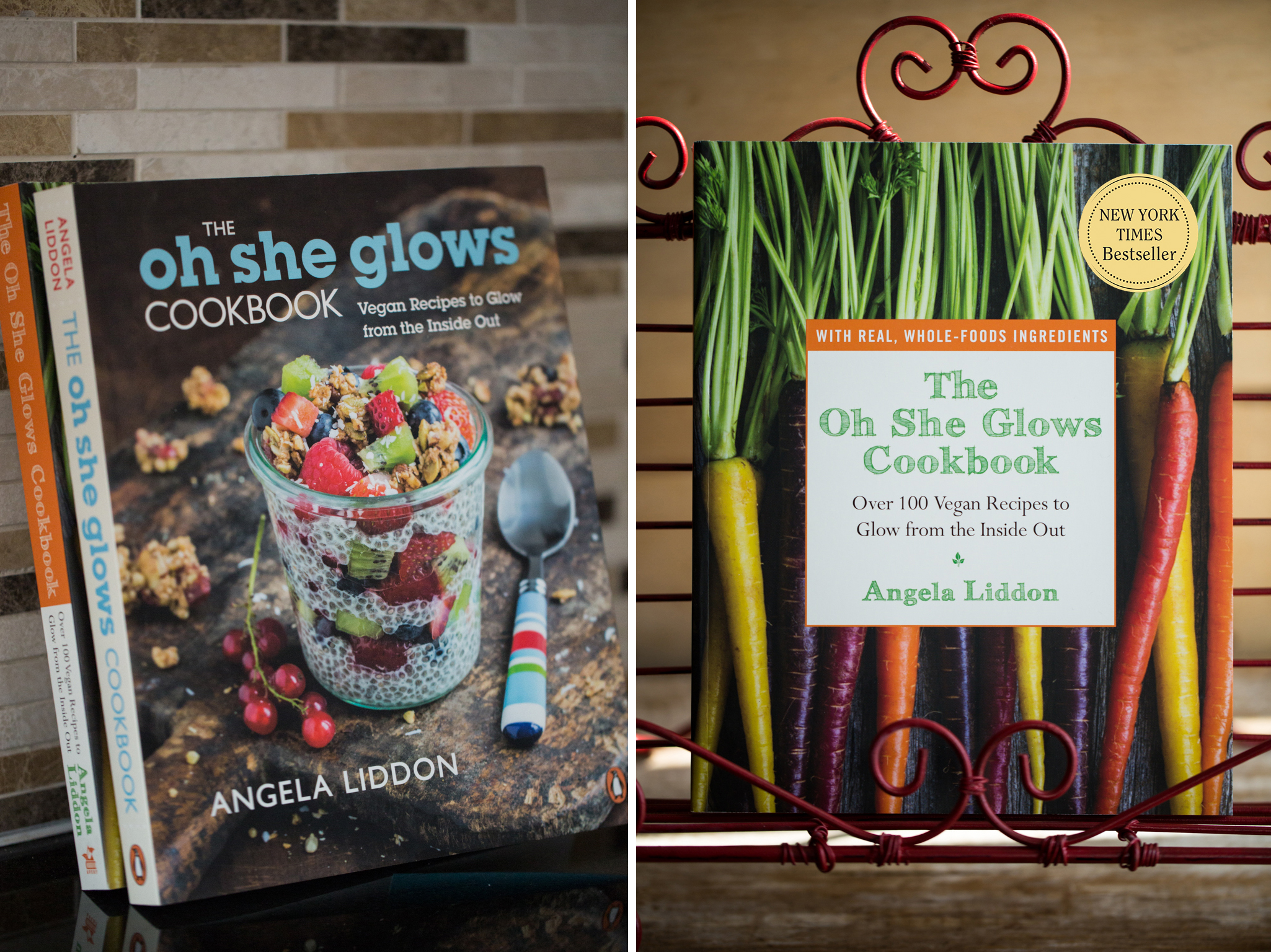
My mom bought me the cookbook for my birthday, and when she handed it to me, she said, "I don't mean you have to become one." Vegan, she meant. She just thought that the recipes here looked healthy and delicious. And boy, was she right. Every single recipe I've tried has been great - easy, interesting, and filled with wholesome things. Many of the recipes are gluten-free as well as vegan, meaning that they have all kinds of fun alternative grains. I've cooked fewer things from the blog than the cookbook, but author Angela Liddon has filled it with variations on some of her popular recipes, including lots of yummy-looking desserts.

Smitten Kitchen (cookbook and blog)

This is not a vegan or even vegetarian site, but author Deb Perelman was once a vegetarian and she continues to elevate humble vegetables into delicious and creative meals and sides - her website has both vegan and vegetarian categories in the index. Simply the recipe for slow cooker black bean ragout would make it one of the most highly used resources in my kitchen. (The recipe is from the cookbook and you can also find it here). I make the black bean ragout every few weeks, doling it out into zip-locs and freezing portions for use in any recipe that calls for black beans. Canned black beans seem positively blah in comparison.

Pinterest

Pinterest is a home cook's best friend. Not only can I peruse the recipes for hours on end, but it allows me to keep my recipes organized. Every week when I make my weekly meal plan, I get out my favorite cookbooks and my Kindle with Pinterest open on it -- I often find that I'll plan a whole week of meals just from Pinterest. It makes it easy to find recipes for any kind of special diet, and it can lead you to great blogs that you never would have discovered otherwise. (My veggie/vegan board is here).

The Post-Punk Kitchen (blog, and author Isa Chandra Moskowitz has also written some cookbooks and made videos and done all kinds of fun stuff).

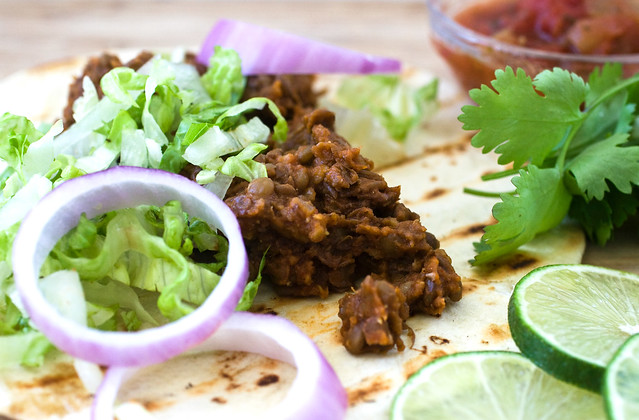
Have you ever had a cookbook where everything you make from it is always a success? That's how I feel about the recipes I've made from the Post-Punk Kitchen. Ancho lentil tacos (see here)? The bomb. Brussels sprouts fried rice? To die for. Red lentil Thai chili? So warm and delicious. I admit, I haven't gotten as deep into the playlist on this site because I keep coming back to these awesome favorites. Isa loves to play with interesting flavors and the spices, and lots of her recipes are beloved by non-vegetarians as well. I'm pretty excited to try the stout shepherd's pie with a potato biscuit topping...

These are the resources that have gotten me started in this new cooking adventure. Any others I should know about?

Sunday, July 20, 2014

More Blogging!

Why, hello there.

I'm back.

Actually, I didn't go anywhere. I've been here in Houston all summer, working at my organization's summer teacher training institute. Because I worked 12-hour days for much of the summer (and had a blast doing it), I decided to take some time off from blogging. And to be completely honest, dear reader, I felt like I needed to figure out the place blogging has in my life right now. 

Turns out, I was constantly thinking of blog posts as I was going about my day-to-day of training amazing young teachers. You should probably be glad you were spared the World-Cup-themed rant about how sports mania contributes to a culture of war.  But I found that I have a lot that I still want to say.  I'm still not 100% sure how often I'll be blogging (more on that below) but I'm not giving it up or anything.

I thought to get back in the groove, I'd update you on this year's theme: the year of MORE. I had three things I wanted to focus on:
1) eating MORE whole foods
2) spending MORE time outside
3) fitting in MORE time to write 

So how did those things fit into my crazy summer schedule?

1) More Whole Foods
I made these in my garden.
I gave myself a lot of grace when it came to cooking this summer, but I had two main commitments. I cooked on the weekend so that I could bring my own lunches to the institute, and I made a green smoothie every day. The lunches weren't always whole foods - I made burritos and Thai peanut chicken over rice - but at least it was home cooking and I could choose ingredients that were low in salt and preservatives and didn't have high fructose corn syrup.

A lot of people asked me throughout the summer how I had so much energy, given those 12-hour work days. I owe that to drinking a cup of kale or spinach every day in the form of a smoothie. I don't think it's magic or anything, but having a green smoothie just kept me going throughout the day. 


Spontaneous day trip to the beach!
2) More Outside Time
OK, I'll be completely frank here: I don't like to spend time outside in the summer in Houston. When I lived up north, we stayed inside much of the winter. That's how I treat summer in Houston.  Really, I don't even try to go outside. There are giant mosquitoes! Flying cockroaches! Alligators! (I've never seen an alligator in Houston, but there are definitely signs by the bayou telling you to watch out for them.)

I have managed to keep a slightly successful garden going. I say "slightly" because by most standards, it would be pretty pathetic, but it's been my most successful foray into green-thumbing it. I've gotten some tiny tomatoes and jalapenos, and my basil plant is going nuts. It's the first time I've kept a garden this long with ALL the plants surviving. I call that a win. 

3) More Writing Time
I've actually managed to make this a priority. I thought about what held me back from writing as much as I want to, and I found that I'm tired of the computer at the end of the day. I decided to start writing by hand, and on the weekend type up what I created. This has worked like a charm, and has allowed me to sustain my creativity through sketching, making notes, and otherwise being the stationery nerd that I am at heart.

However, this is not a great solution when it comes to blogging. (Blog by mail anyone?). I'll continue to think through my relationship to my computer and what that will mean for writing.

What's coming up?
You want to know more about how I've fit more leafy greens into my diet, right? Especially since I break my mother's heart by not eating a salad every day with dinner.

I'm also planning posts on fangirling, a summer pop-culture round up, and some thoughts on White privilege at the liquor store.

I'm glad to be back!


Thursday, March 20, 2014

Recipe: Shamrock Shimmy Smoothie

Mid-morning snack attack at work!
Shamrock shimmy smoothie!
Anyone who knows me, knows that I'm always ahead of the trends.

Exhibit A: Before most people had heard of Nirvana, I had already decided I didn't like them. Billy Joel, people. That's where it's at.


Exhibit B: Prior to "boho chic" being a major trend, I was sporting hippie threads that I dug out of the drama closet at summer camp.

Exhibit C: Prior to knitting becoming a trend, I taught myself knitting from a kit called "I Taught Myself Knitting!"

(Hmm... I'm beginning to realize I may not be as cool as I thought...)

One trend that I just haven't been able to get behind, though, is KALE. Seriously. Why would I want a salad that's made out of wadded up paper towels? My nightmare is being forced to eat a kale quinoa salad at a pop-up restaurant while watching Girls and listening to EDM. I imagine that in ten years, people are going to wake up and be all: why did I eat that? And why did we think that stuff was cool?

Even more baffling to me: putting KALE in a smoothie. A smoothie is supposed to be a bait-and-switch so that you can drink milkshakes and feel healthy about it. Peanut butter, banana, Hershey's. That's a smoothie.

Do you sense that I'm about to eat my words?

I still don't want a kale salad or a big plate of kale or a kale cupcake. My mom got me the Oh She Glows cookbook for my birthday, though, and it has several recipes for green smoothies in it.  Oh She Glows is a blog of vegan, whole foods recipes (when you Google it, the first search that comes up is "Oh She Glows kale salad"). The blog and the cookbook are great because lot of vegan recipes are heavy on soy products and processed fake-meat-like foods, which I try to avoid, particularly because it's the "Year of More" and that means more whole foods

For some reason, I thought I'd give green smoothies a try after every blogger in the world had already decided they were God's gifts to moms who give their kids cute nicknames on the internet. Guess what? 

Reader, I loved it.

So let's come around to the recipe, shall we?

A few days after this revelation, I was cruising on that great recipe-box-in-the-cloud, Pinterest, and there was a recipe for "healthy Shamrock shake - with mint!" I have never had a Shamrock shake, but that sounded pretty good.

For some reason, I pictured "mint" as being, you know ... mint. Like leaves, and stuff. I always forget that a lot of people don't eat natural things. The recipe was made with milk (I'm cutting way back on dairy), chocolate chips (didn't have those), and peppermint extract. Since I have a bunch of mint growing in my garden, I decided that I could make a "Shamrock" smoothie that would actually be healthy.

Below is the recipe my first stab at making my own green smoothie. I think it is SO delicious. At least to me, and I'm the one drinking it. 

A few notes:

  • I've made it with both baby kale and baby spinach, but if you're making it for kids and you want them to forget there are greens involved, I'd go with the spinach.
  • I used honey in this recipe, but if you want it to be completely vegan, then substitute a plant-based sweetener.
  • This is not a cute color.
Shamrock Shimmy Smoothie

Ingredients
1 c. non-dairy milk (I like hemp milk)
3/4-1 c. baby kale or baby spinach, de-stemmed and torn
1 banana, sliced and frozen
6-10 fresh mint leaves
1 tbsp. unsweetened cocoa powder
2 tsp. honey

Step 1) put everything in a blender and blend it and drink it. 


Sunday, January 12, 2014

Water, water everywhere...

... and not a drop to drink.

At least, that's the case in West Virginia, where a chemical spill has contaminated the water supply for nine counties. Like something out of the environmental thriller The East (watch it, if you haven't - most people haven't), the spill will cause massive costs for all of us who pay taxes, since FEMA has been called in to deal with the disaster.

This is especially shameful because safe drinking water is one of the huge achievements of our nation. When clean water gushes out of our taps day-in and day-out, we forget that this is a friggin' miracle. For much of human history, and in many parts of the world today, water-borne illnesses are a huge cause of lost wages and school time, disability and death. More children around the world die from diarrhea caused by unsafe water than from AIDS and malaria combined. Ever hear someone say, "Yeah, I just had cholera last week"? Neither have I - because we don't have to worry about cholera. We also don't have to spend half the day walking to get water to lug home. 


What's happened in West Virginia is incredibly rare in the U.S., and we shouldn't let it scare us off tap water (and we should also ensure that the company, Freedom Industries, has to pay so that these kinds of spills don't become more common).

 I admit, I get a little hot when people say, "I don't drink tap water." 

First off, if you drink bottled water, you probably do drink tap water. The NRDC estimates that 25% of bottled water is actually tap water, and sometimes it's not even filtered additionally. Those companies then profit from our public utilities - the utilities and EPA make sure the water is safe, and the companies who sell the water don't have to worry about it. 

Of course, bottled water contributes significantly to the amount of plastic in landfills, and the plastic itself can leach into the water. 

While almost all drinking water in the U.S. is extremely safe for almost all people (some with compromised immune systems shouldn't drink it), if you are worried:

  • your utility is required to provide an annual safety report. Just call them up and they must send you one.
  • use a filter. This is also helpful for those who don't drink tap water because of taste.
I've been drinking tap water since I was a kid, and I just fill up my trusty ol' glass Voss water bottle (it's about $2 and then you have a heavy-duty glass water bottle that lasts and lasts).  I've even been known to drink from drinking fountains in public parks and drink water out of my bathroom sink. Still kickin'.

Thursday, June 27, 2013

Waste Not...Freezing Fresh Herbs

After living on the farm for awhile, I've come to realize that I'm not exactly Ms. Green Thumb. I'm also not a black thumb. My thumb is probably more of a chamo brown. 

I have been successful growing herbs, however, and it is nice that I don't have to worry about buying mint or rosemary or basil. When my cilantro bolted (produced flowers, which takes away resources from the leaves, which means that the herbs aren't so nice anymore) I didn't know what to do with all of the extra cilantro, so it went to waste.

When my dill plant bolted, I was ready. I remembered that I had seen an article once on freezing herbs in blocks of ice, and so I did some research and figured out how to preserve herbs. You don't have to be a horticulturist to use this technique - think of all those herbs that come in giant bunches from the grocery store. I was always buying them and then finding it  hard to use the bunch before the herbs turned into a slimy mess. If you follow this method, you can preserve them, saving money, trips to the store, and resources.

Step One: Wash and dry the herbs. This is the dill from my garden. Notice it was a little yellow in places because I harvested it after it bolted, but I just cut those parts out in Step 2.


Step 2: When the herbs are completely dry, chop them to the size you usually use in cooking.

Step 3: Measure the herbs, putting the same amount in each pocket of an ice cube tray, and fill with water. I put a teaspoon in each square. That way, I'll know exactly how much to thaw when I need it. You want to be sure that you put the faucet on just a little when you fill with water. Otherwise the herbs could be splashed from the tray.


Step 4: Freeze, making sure the tray is flat in the freezer.


Step 5: When they are frozen, put them in a freezer bag, squeezing out all the air. Label with the name of the herb and the amount in each cube.

When you're ready to use, just put the appropriate number of cubes in a small bowl to thaw, then squeeze out the water and dry.

Saturday, May 18, 2013

Recipe: Homemade Refried Beans

... And now for something completely different.

So, it's a little heavy around here, right? What with the activism and the inspiration and the visits to prison?

Here's some food activism for you, then.

As I've been working to dramatically decrease the number of canned products I buy (if I can't get a BPA-free can), I realized I would have to find a substitute for one of my staple foods - canned refried beans. I'm rather famous in my family for my love of beans (c'mon, they are like the perfect food - filled with protein and fiber and deliciousness). There are a couple of companies, like Eden Organics, that make plain canned beans that are both readily available in many regular grocery stores and come in BPA-free cans. However, it's much harder to find the refried beans in my local groceries.

Luckily, I've discovered that making refried beans is incredibly easy and they taste 1000 times better if you make them at home. It really doesn't even seem like the same food. Just goes to show that most of the food we buy is processed to the point that we don't even know how the real thing tastes.

Before the recipe, a couple of notes:

  • Traditionally, refried beans are made with lard or bacon fat or some other animal fat. Because I don't eat red meat, I use butter in the recipe. It's extremely tasty, but if you are a carnivore and you want something more authentic you could substitute fat from an animal, I suppose.
  • You need cooked pinto or black beans for the recipe. I usually cook them in my slow cooker and then save 2-cup portions in my freezer, along with the liquid from the slow cooker. You can use canned beans, but of course, you want to be sure that you find one that says, "this can was made with a liner that does not include BPA," or something similar. 
  • I usually make my beans in the slow cooker with onion, garlic, and cumin. If I do, I reduce the amounts in the recipe below. The recipe below is written as if you're using plain beans.
Homemade Refried Beans

Ingredients:
  • Cooked pinto or black beans with the liquid. For each cup of beans you use, you'll need:
    • 1 tbsp. butter
    • quarter of an onion, chopped
    • 1-2 garlic cloves, crushed
    • 1/2 tsp. salt (I like less salt than many Americans, so you could use a little more if it's not flavorful enough for you)
    • 1/2 tsp. cumin
    • 1/4-1/2 tsp. cayenne pepper
Step 1: Place the butter in a saucepan over medium heat. When it's just about melted, throw in the onion and garlic. Saute for 2-3 minutes.

Step 2: Add the beans and the spices. Bring to a simmer. Lower the heat and simmer uncovered, stirring occasionally, for 20-30 minutes or until the liquid is mostly reduced.

Step 3: Take the beans off the heat and mash with a potato masher until they are the consistency you want - I like mine to be chunky.

Step 4: Let sit for 5-10 minutes to thicken.

You can then use these in tacos or burritos, or as a side dish. Yum!